
Sales Hotline: 13380126037
24-Hour Hotline: 13288890952
Die cutting requires considerable expertise. Even experienced operators face challenging problems. The following lists common issues and solutions for industry reference.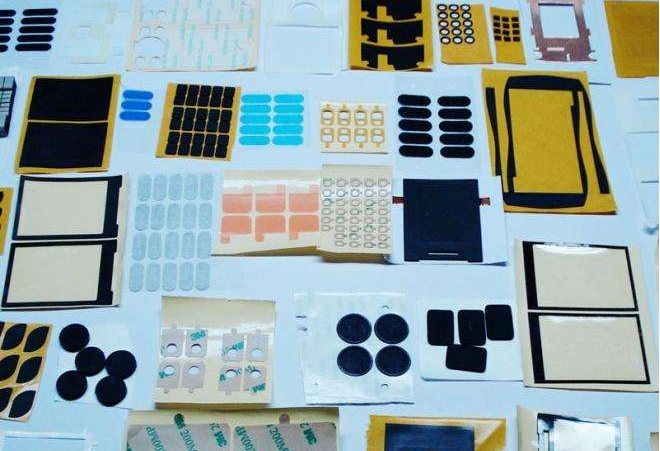 1. Product Deformation
When products deform, check whether die-ejection foam meets requirements for elasticity, hardness, height and thickness. Different materials require different settings. Also check lamination and tension control, since problems can cause shrinkage, particularly with foam adhesive and PE protective films. Proper lamination tension reduces deformation. For rubber products, die angle may be responsible; single-bevel blades are commonly used, with foam hardness and height adjusted to the cutting requirements.
2. Deformation of Narrow-Border Products
For less demanding products with borders within 0.8 mm, experienced operators may use progressive cutting of inner and outer frames to reduce tooling costs and setup steps. Dimensions depend strongly on machine performance and operator control, with risks of offset and poor registration. Difficult products may require two or more forming operations.
3. Creasing Problems
Creasing defects vary in severity and acceptable levels depend on product standards. Address blade and material angles, ejection foam and die design. Select foam and adjustment methods appropriate to each die. The platen should have no pressure grooves, and the lower platen must be hard enough to resist grooves during extended operation.
Business Hotline: 13288890952
Phone: 13380126037
Address: Room 101, No. 170 Huangshahe East Road, Xiangxi Village, Liaobu Town, Dongguan, Guangdong, China E-Mail:yanggang@qydg.com.cn
Copyright © 2024 Dongguan Qingyang Electronic Technology Co., Ltd. All Rights Reserved. 粤ICP备2024328534号-1 粤ICP备2024328534号-2
 Scan to add us on WeChatScan to contact us on WeChat
Service Hotline